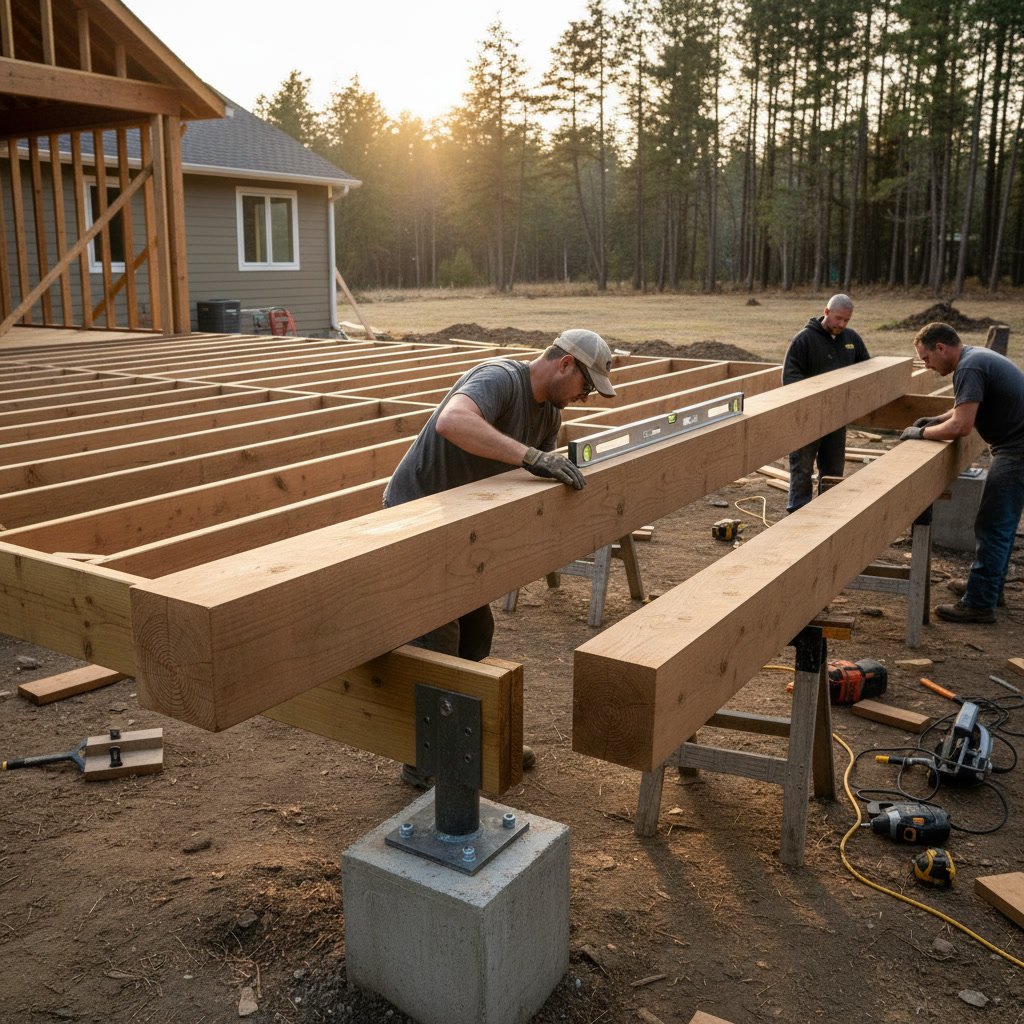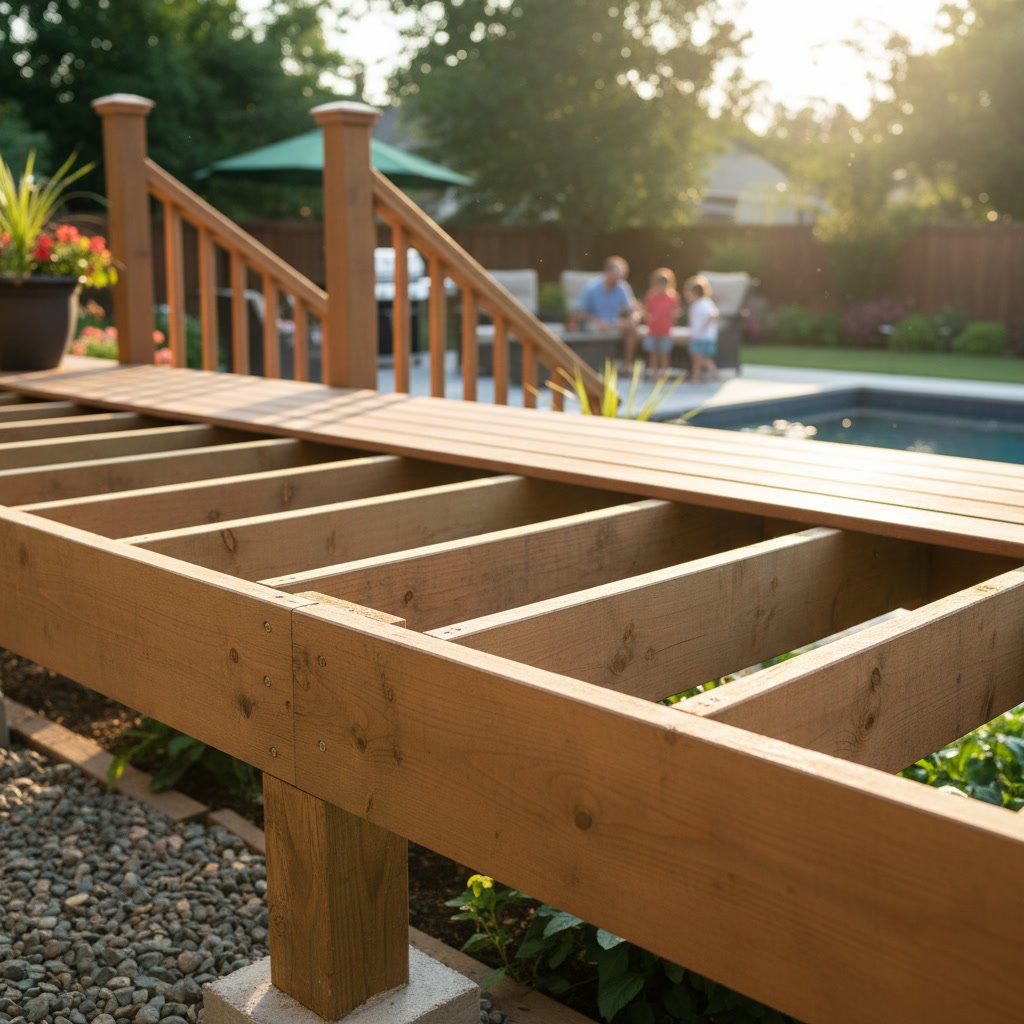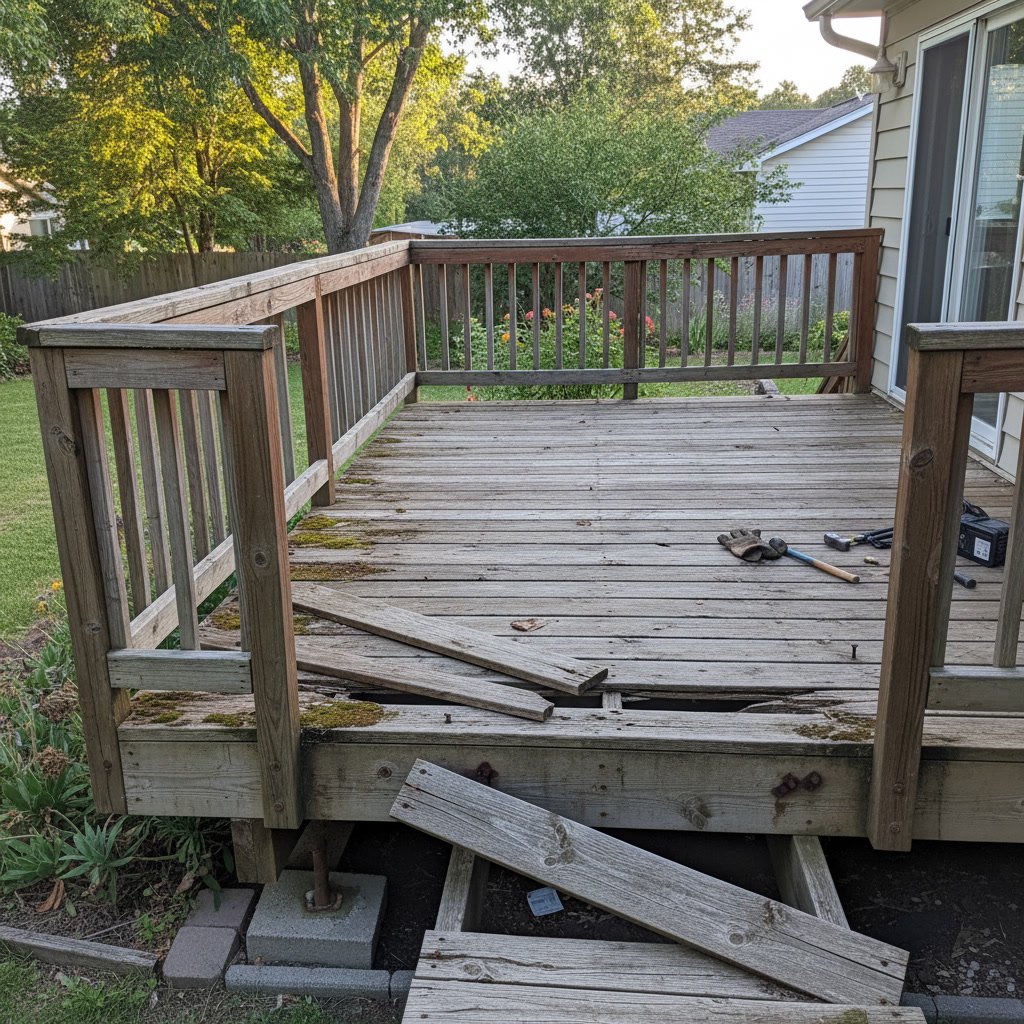
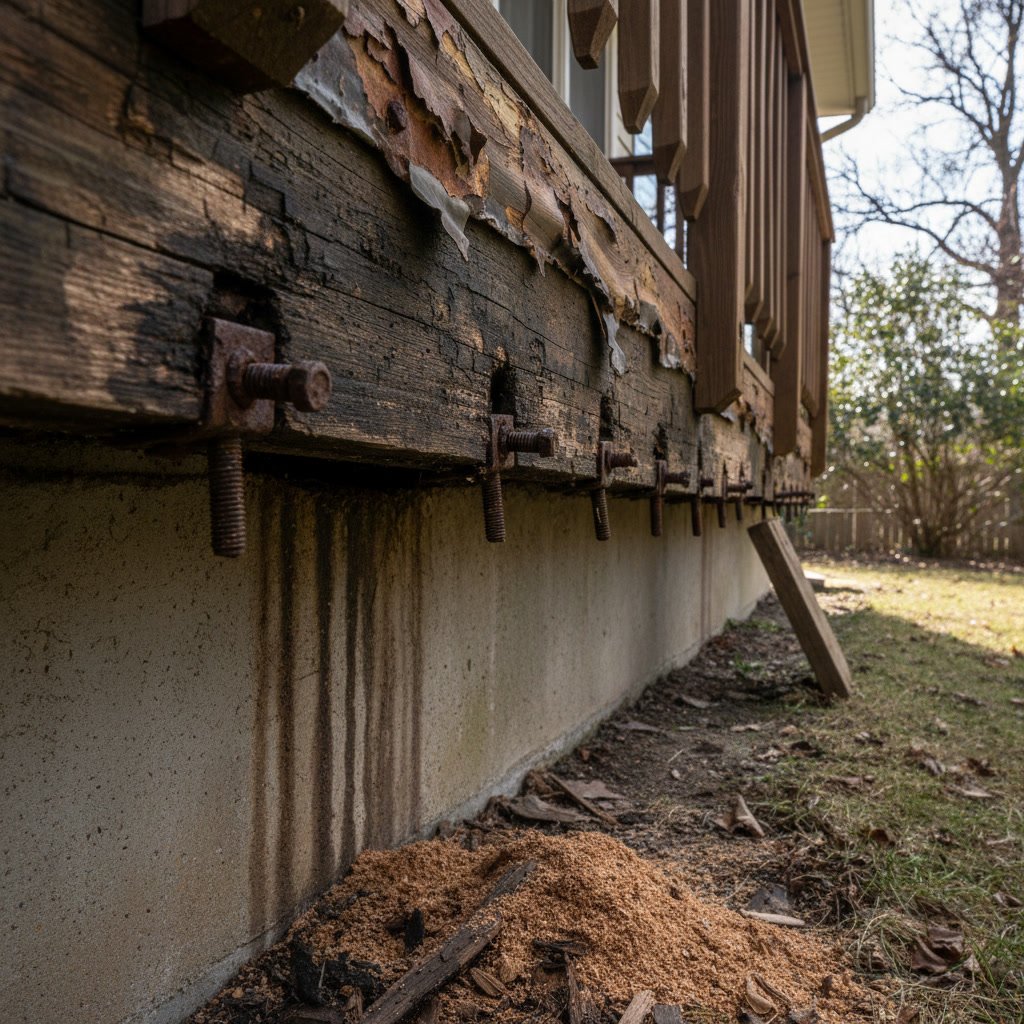
The ledger board is the most critical structural component of any attached deck, bolting directly to your home’s rim joist and supporting up to half the deck’s total weight. When deck ledger board problems develop, the entire structure becomes unsafe, and catastrophic collapse can occur without warning. Common signs of failure include visible gaps between the board and house, rust stains, soft or splintered wood, and water damage around fasteners.
Understanding What a Deck Ledger Board Does
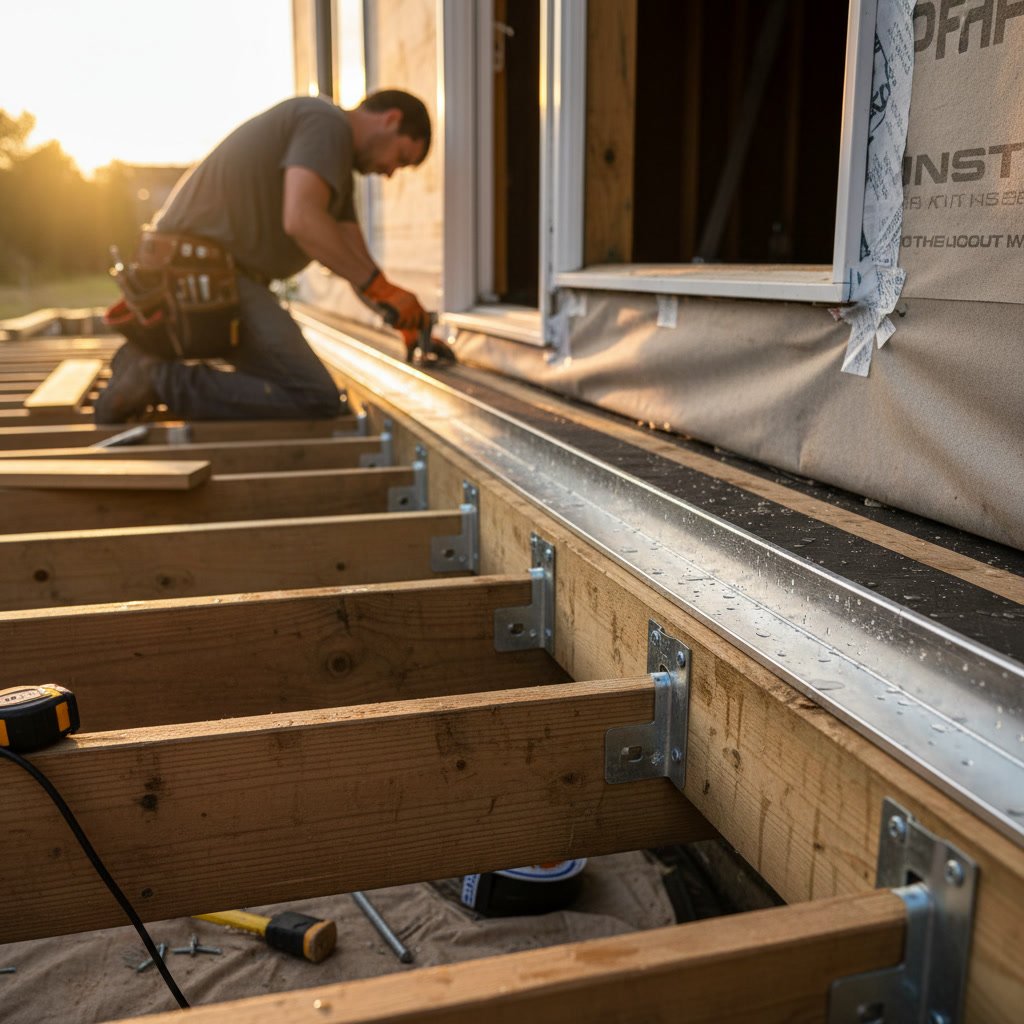
A deck ledger board serves as the primary attachment point where your deck connects to your house. This horizontal beam, typically a 2×8 or 2×10 pressure-treated board, transfers the load from your deck directly into your home’s structural framing. Without a properly installed and maintained ledger, your deck lacks the support needed to safely carry people, furniture, and the deck’s own dead load.
The ledger must be fastened with approved lag screws or through-bolts spaced according to building codes. Any compromise to this connection point puts everyone who uses the deck at risk. Professional installation ensures the ledger is properly flashed, sealed against moisture intrusion, and secured to solid framing members rather than just exterior sheathing.
Why Ledger Boards Fail Over Time
Most ledger failures stem from water infiltration behind the board. When moisture becomes trapped between the ledger and your home’s rim joist, rot develops in hidden areas you cannot see during casual inspections. Improper flashing during initial installation is the leading cause, allowing rainwater to run down the house siding and pool behind the ledger.
Incorrect fastener selection accelerates deterioration. Galvanized lag screws or bolts will corrode over 15 to 20 years, especially in humid climates or when exposed to ground moisture. Modern codes require hot-dipped galvanized or stainless steel fasteners for this exact reason. Older decks built before current standards often used inadequate hardware that simply cannot withstand decades of exposure.
Visible Gaps Between the Ledger and House
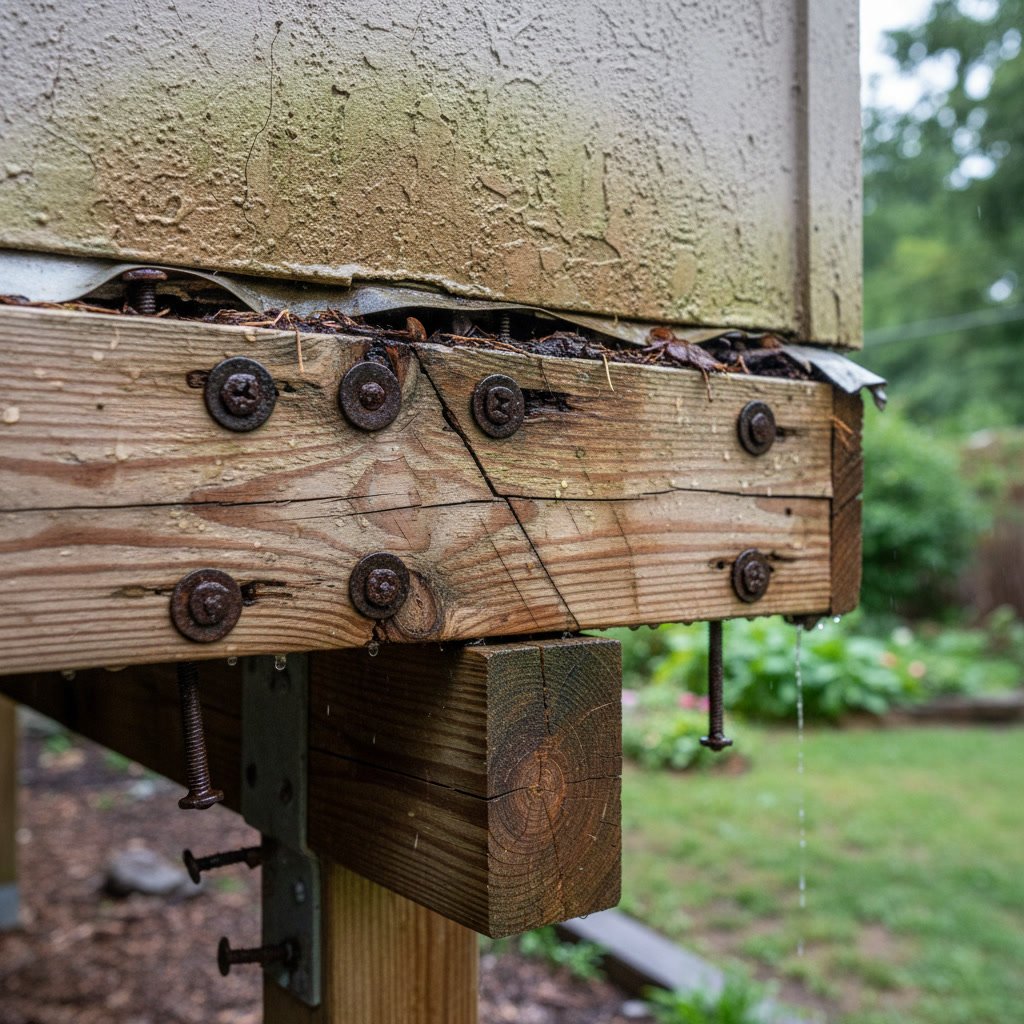
When you notice a gap developing between your ledger board and the house wall, the fasteners have either pulled out partially or the wood has compressed and deteriorated. Even a quarter-inch gap indicates serious structural compromise. This separation allows the deck to move independently from the house, creating a hinge point where complete detachment becomes increasingly likely.
Check for gaps by running your hand along the connection point where the deck meets your home. Any space you can fit your fingers into requires immediate professional evaluation. The gap may be consistent across the entire length or localized to specific areas where rot has progressed furthest.
Rust Stains and Corroded Hardware in Minisink
Rust streaks running down from bolt or screw heads signal that your fasteners are corroding from the inside out. In the Hudson Valley region, freeze-thaw cycles and seasonal moisture create ideal conditions for metal deterioration. Once rust appears on the surface, the hidden portion of the fastener embedded in the wood has already lost significant holding strength.
Tap on visible bolt heads with a wrench. If they turn easily or feel loose, the threads have corroded and the connection has failed. Replacing individual fasteners rarely solves the underlying problem because if one has failed, others in similar conditions are close behind. A complete ledger replacement typically becomes necessary once widespread corrosion appears.
Soft, Spongy, or Discolored Wood
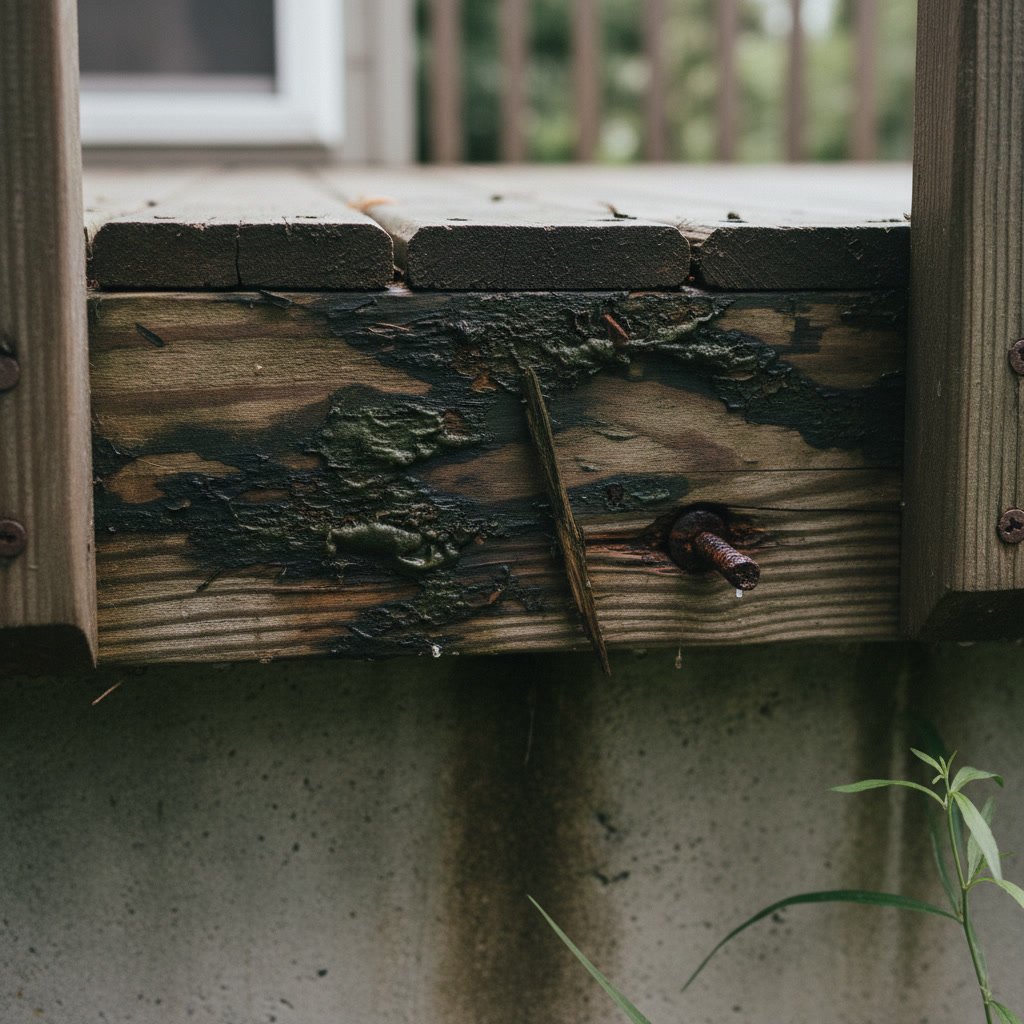
Press a screwdriver tip into the ledger board at multiple points along its length. Healthy pressure-treated lumber will resist penetration. If the screwdriver sinks in easily, the wood has begun rotting from moisture exposure. This test works best near fastener locations and at the ends of the ledger where water tends to accumulate.
Discoloration ranging from dark brown to black indicates advanced decay. Wood that appears normal on the surface may be completely compromised underneath. Professional inspectors use moisture meters to detect hidden damage before visible symptoms appear, which is why regular deck inspections matter for safety.
The Deck Bounces or Feels Unstable
A properly attached deck should feel rock-solid with minimal lateral movement. When you notice excessive bounce, sway, or a sensation that the deck is pulling away from the house when you walk on the outer edge, the ledger connection has weakened significantly. This instability often becomes more pronounced when multiple people gather on the deck.
Test stability by standing at the point farthest from the house and bouncing gently. Any movement that feels excessive compared to when the deck was new warrants investigation. The problem may involve the ledger, the rim joist it attaches to, or both. Either scenario requires prompt repair services from an experienced contractor.
Water Damage Signs Around the Connection Point
Inspect your home’s siding and trim directly above the ledger board. Water stains, peeling paint, or rotting wood on your house exterior indicate that moisture is getting behind the ledger and potentially damaging your home’s structural framing. This type of damage extends beyond the deck itself and can require extensive repairs to your home’s rim joist and floor system.
Look inside your basement or crawl space at the area where the deck attaches. Staining, efflorescence, or visible rot on the interior side of the rim joist confirms water penetration. At this stage, both the ledger and portions of your home’s framing likely need replacement. Catching these signs early prevents what could become a five-figure repair bill.
How Old Deck Materials Affect Ledger Lifespan
Decks built before 2003 often used CCA (chromated copper arsenate) treated lumber for ledger boards. While this material resists rot well, it corrodes metal fasteners aggressively. If you have an older deck with original CCA lumber and galvanized fasteners, you are approaching the end of safe service life regardless of visible condition.
Newer ACQ (alkaline copper quaternary) treated lumber also corrodes standard galvanized hardware faster than older formulations. This is why building codes now specify stainless steel or specially coated fasteners for ledger connections. If your deck was built during the transition period of 2003 to 2010, verify what fastener type was used. Many contractors continued using incompatible hardware out of habit, creating hidden time bombs. Understanding these material interactions helps explain why even relatively new decks sometimes develop serious problems.
Inspection Checklist for Homeowners
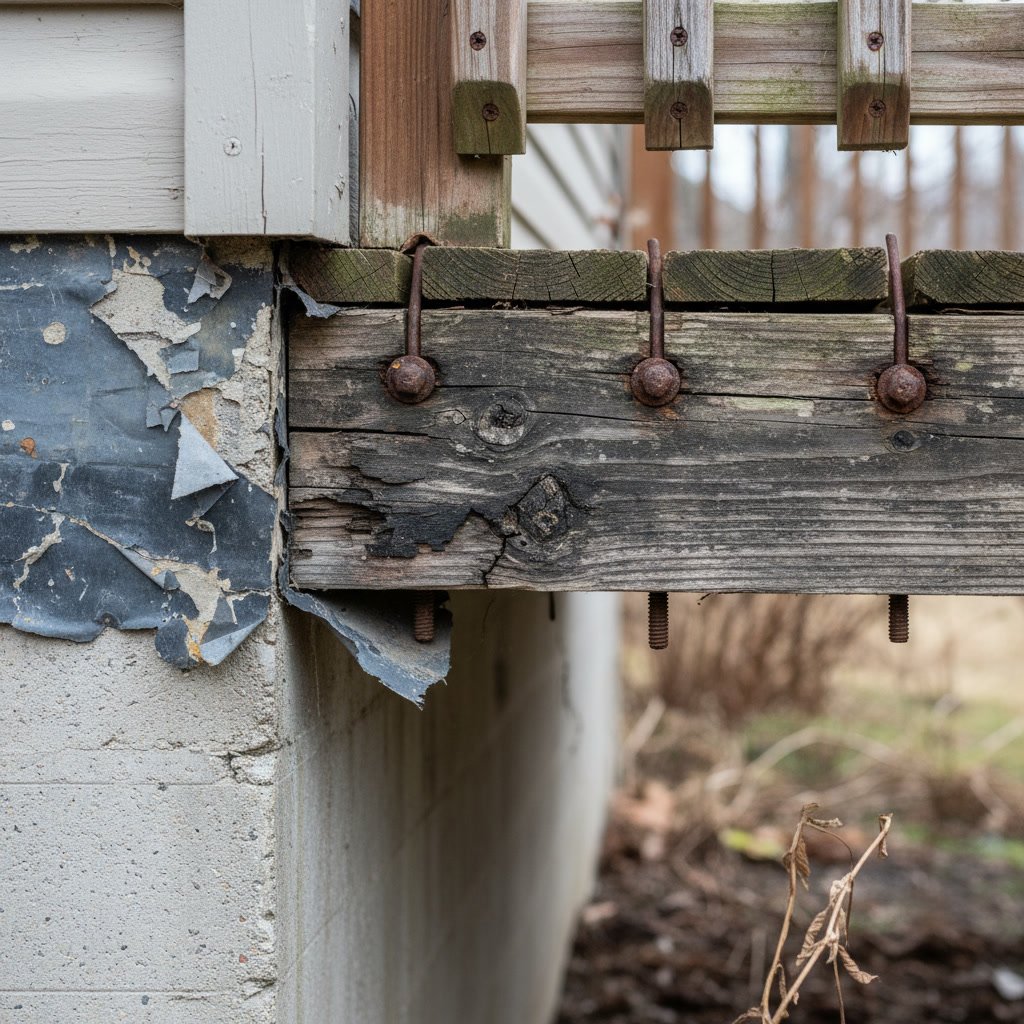
Perform a basic ledger inspection twice per year, ideally in spring after snow melt and in fall before winter. Your checklist should include these specific steps:
- Remove any leaves, debris, or soil that has accumulated against the ledger board
- Check for gaps between the ledger and house at six-inch intervals along the entire length
- Look for rust stains or corrosion around each visible fastener head
- Test wood firmness with a screwdriver at fastener locations and board ends
- Examine house siding and trim above the ledger for water damage
- Verify that flashing is intact and properly directing water away from the connection
- Test deck stability with the bounce method described earlier
Document your findings with photos dated and labeled by location. This creates a record that helps you notice gradual changes over time. If any inspection reveals concerning signs, contact a licensed contractor immediately rather than waiting for your next scheduled check.
Professional Repair Versus Complete Replacement
Minor ledger issues caught extremely early may allow for spot repairs, such as adding supplemental fasteners or improving flashing details. However, most situations discovered by homeowners have progressed beyond the repair stage. When rot, corrosion, or structural movement is present, complete ledger replacement is the only safe option.
A professional replacement involves temporarily supporting the deck with posts, removing the compromised ledger, inspecting and repairing the house rim joist if damaged, installing new pressure-treated lumber with code-compliant stainless steel fasteners, and properly flashing the connection. This process typically takes one to two days for an average-sized deck and prevents the need for emergency repairs after a collapse.
Attempting DIY ledger replacement without proper engineering knowledge and temporary support structures puts you and your home at risk. The loads involved exceed what typical homeowner equipment can safely handle. Licensed contractors carry liability insurance specifically because deck work involves life-safety systems. When you need deck services, choosing experienced professionals protects both your investment and your family.
Protecting Your Investment and Family Safety
Deck collapses injure thousands of people each year, and ledger failure is the most common cause. Unlike other deck problems that develop gradually, ledger detachment can happen suddenly when a gathering of people loads the structure beyond what the weakened connection can support. The time to address warning signs is before you host that graduation party or family barbecue.
Regular inspections, prompt repairs, and choosing quality materials during initial construction all contribute to deck longevity. When selecting materials for your deck project, remember that the hidden components like the ledger board and its fasteners matter just as much as the visible decking and railings. Investing in proper installation and maintenance costs far less than dealing with structural failure or personal injury.
Our Nest Contracting LLC has served homeowners throughout the Hudson Valley for over 30 years, building and repairing decks with the structural integrity and attention to detail that ensures decades of safe use. If you have noticed any of the warning signs discussed in this article, do not wait for the problem to worsen. A professional inspection takes less than an hour and provides the peace of mind that your deck is safe for your family and guests. Contact Our Nest Contracting LLC at +18459887059 to schedule your deck safety evaluation and receive a detailed assessment of your ledger board condition.